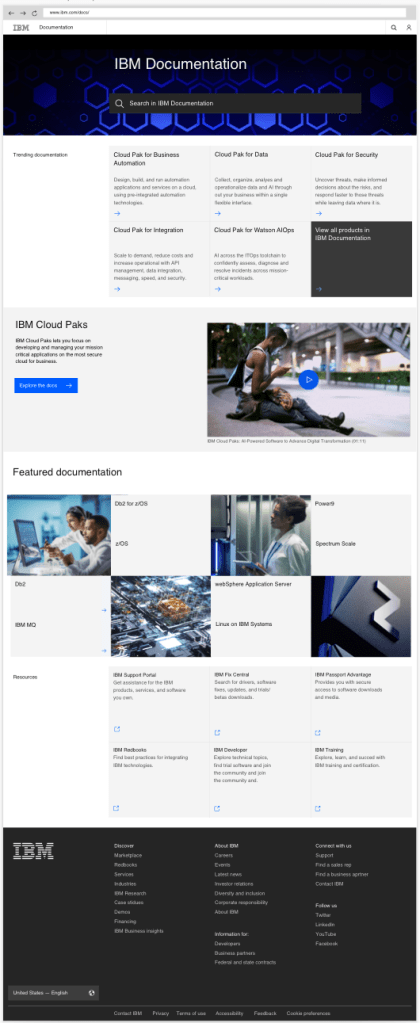
IBM Documentation
Roles
Lead
Product Designer
User Researcher
Timeline
IBM Documentation:
January 2020 –
September 2021
IBM Knowledge Center:
September 2014 -December 2019
Tools
Mural
Sketch
Invision
Adobe Creative Suite
Jira, GitHub, Slack
UserTesting.com
Survey Monkey
Google Analytics
Tealeaf
Medallia
NorthPage – DMI
Overview
Historically product documentation shipped with a product release, and was owned by the product team who developed the product. Resulting with product documentation geographically located on various servers around the globe.
IBM Knowledge Center was the outcome of a titanic effort to house and maintain one site for all of IBM’s product documentation. Over the years the site performance was much improved with substantive redesigns, including support for mobile devices, new and innovative site search algorithms, integration with other IBM technical content and significant content reduction.
IBM Documentation is the latest transformation of IBM’s product documentation to IBM’s Cloud, for speed of delivery and access to an ever increasing self-served community.
With this significant back end business transformation came the opportunity for a complete front end redesign. Based on years of data collections and analysis, user research and years of product design, proof of concepts, user testing and a deep knowledge of Carbon Design System, I was perfectly poised to lift and shift the user experience of IBM’s product documentation platform, and have a lasting impact on users’ lives.
Team(s)
A keystone amongst the many milestones in the journey of product development is the trust and collaboration that must be established with your own team, but as well with the many contributing teams that are not involved directly with your project.
IBM Docs is a platform housing and delivering technical content of thousands of products and hundreds of product teams distributed globally.
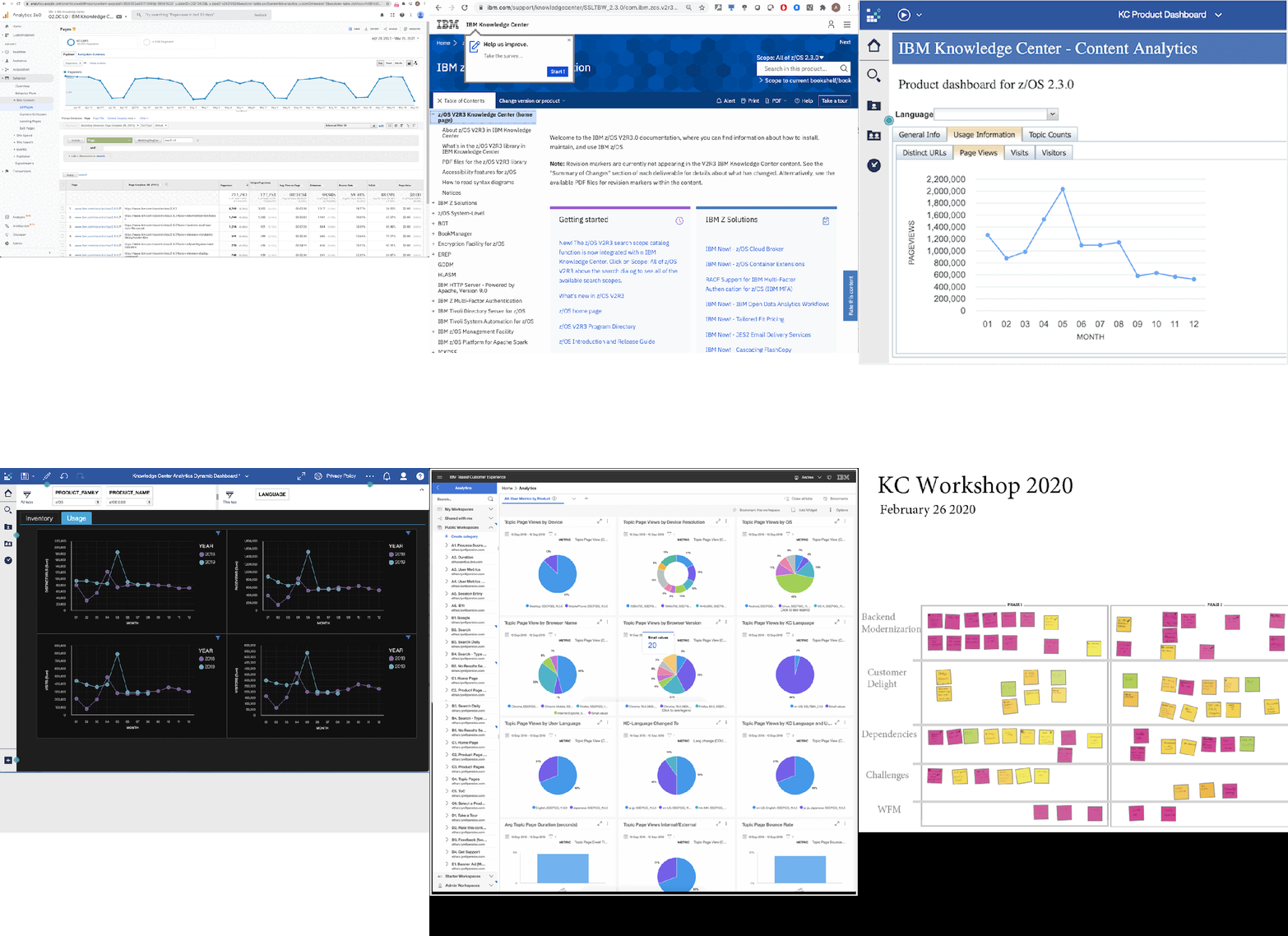
Our platform team was blessed with timing. We met face to face in Bratislava, Slovakia, for a week of planning and team building in February 2020. I had the opportunity to share years of user data collections I had collected from the instrumentation internally deployed on IBM Knowledge Center, such as Google Analytics, Google Search Console, Tealeaf, Medallia, Disqus, Rate this content, KC’s log analyser, as well as expert reports from NorthPage, an external digital market intelligence service.
PROBLEM STATEMENT
Individual using IBM Documentation needs an interactive platform in which they can effectively find technical content in order to facilitate self-serve learning and accommodate problem solving.
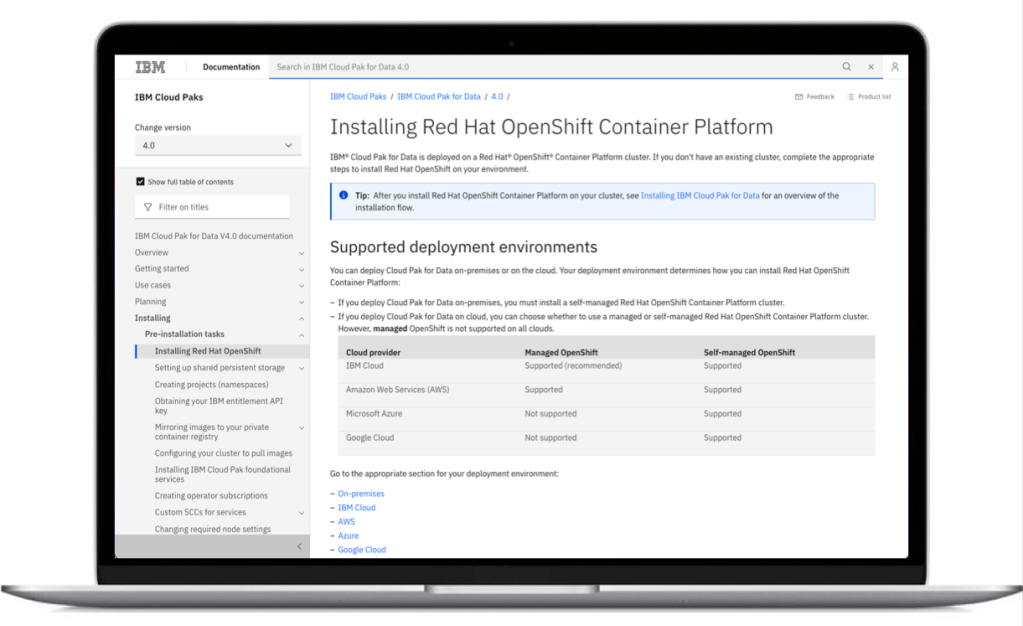
Search engine optimization
80% of all entries to IBM Documentation are from a Google search. With the creation of URLs based on topic-page titles, IBM Documentation improved by a whooping 40% organic searches.
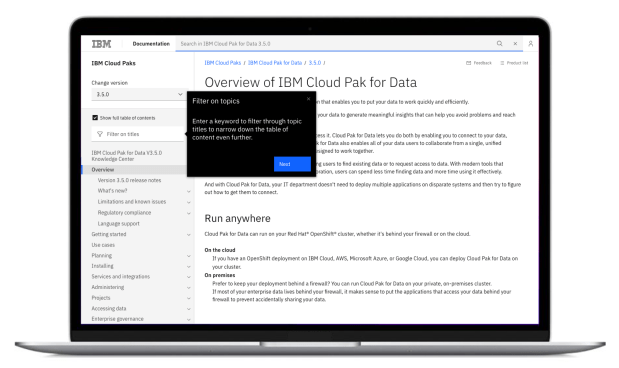
Filterable table of contents
Table of contents are overwhelming. Filtering through hundreds of topic titles with keywords significantly simplifies finding a topic.
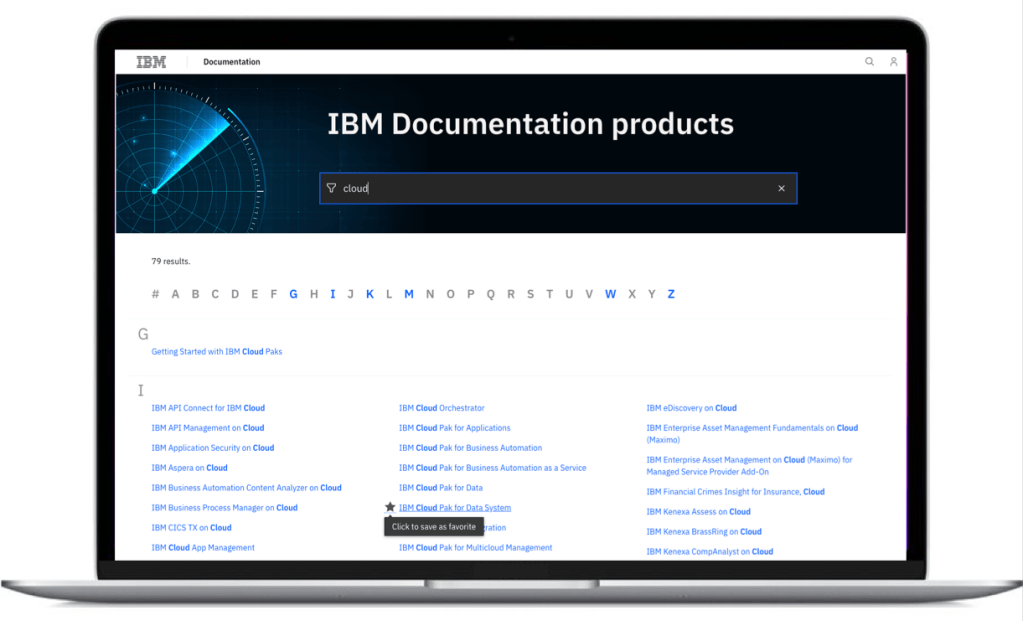
Find a products’ documentation
Filtering on keywords, listed alphabetically and saving favorites are improvements vetted thru sponsored users.
User Research
I’ve enabled a survey on IBM Knowledge Center as well as conducted concepts testing based on user scenarios, which allowed me to both identify common trends and goals among a larger audience while also being able to gather more detailed information insights about their grievances. These were key findings:
79% expects IBM to provide self-service support tools to help them find answers without having to contact support.
84% prefer to solve their issue first by themselves.
77% find poor self-service options worse than nothing at all.
“Using product documentation is one of my most preferred methods of contacting IBM.“
– IBM customer, CDW
COMPETITIVE ANALYSIS
Commissioned NorthPages’ Digital Marketing Intelligence reports profiled digital assets and capabilities of client and peers. Reports detailed benchmark testing of digital functions, such as SEO, mobile experience, content discovery, support deployment against AWS, Google Cloud Platform, Microsoft Azure, SalesForce, and others. The reports provided scored performance to evaluate the digital customer journey to attract, engage, convert and support.
I conducted competitive audits of the same competitors to consider opportunities, identify and document gaps.
While IBM Knowledge Center offered a robust and comprehensive support to product documentation due to its perceived integration with IBM support, it lacked friendliness, ease of use, discoverability and uniformity.
USER PERSONA
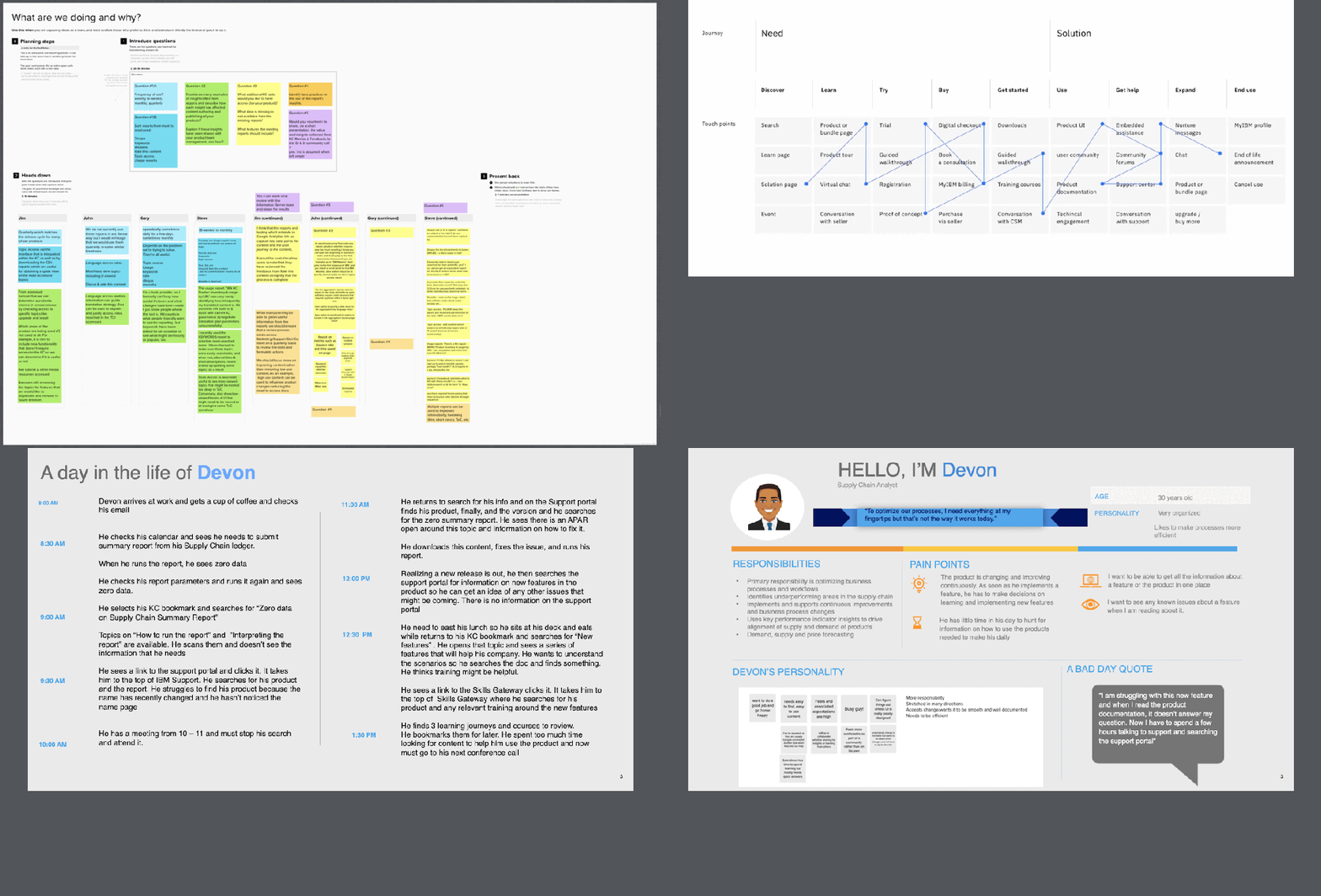
I also developed three user personas based on my findings in order to effectively represent the needs and characteristics of the target users. I shared and socialized the personas with broader internal community of information developers and content designers. I advocated and empathized with the personas throughout the design process.
Ideation
USER FLOWS
The results from both user research as well as the competitive analysis revealed that users’ entry points clearly could be improved with improvements to organic searches. With this in mind, I created a URL pattern and strategy based on the topic-page title which could be mapped to existing URLs. With clean redirects, the new URLs would be caught by SEO and overtime it would significant improved organic search to IBM Documentation content.
Futhermore, the new URL pattern and strategy allowed me to conceptualize how interactions may take place given the new features.
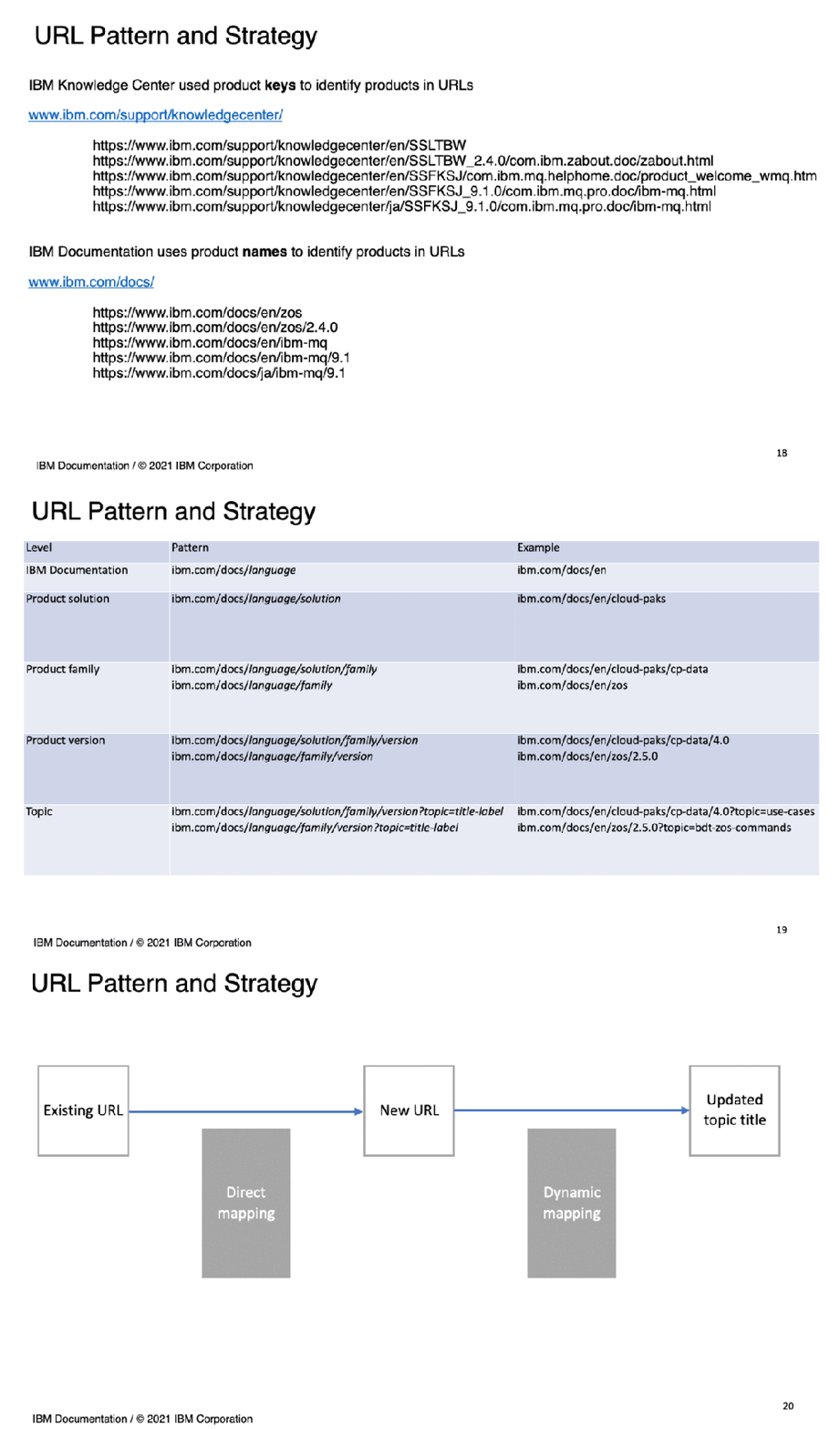
In this UX flow, I decided to focus upon the aspect of creating the new patterns based on words rather than acronyms or cryptic keys. I felt that this was an especially crucial aspect for users to be able to read and comprehend the text string, and more importantly, provide them with the comfort of knowing confidently and independently, where they are in the production documentation.
Furthermore, the use of direct and dynamic mapping create a unified and seamless experience, allowing content owner to edit topic titles as needed and for the organic searches to learn and point to the most recent iteration of the URL.
Iteration, iteration, iteration
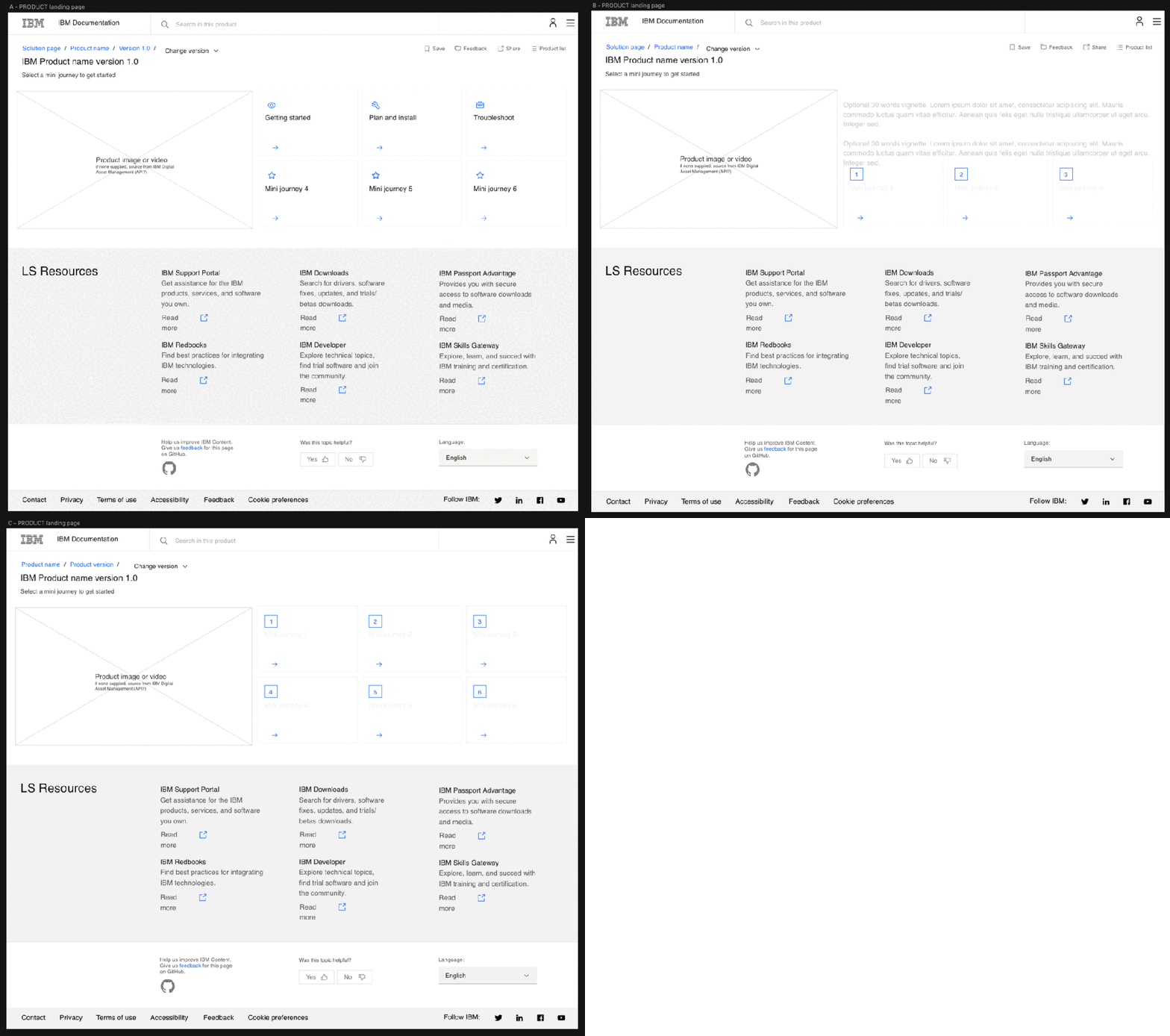
I created low fidelity designs based on user flows and documentation nomenclature to act as first iterations of the redesign.
Breadcrumb & lead entries to product documentation
The first iterations provided users with the ability to change version and select from six key entries into the product documentation.
Solution and product family pages are free of table of content, for a lighter more progressive exposure to textual density, while proposing key user journeys to select from.
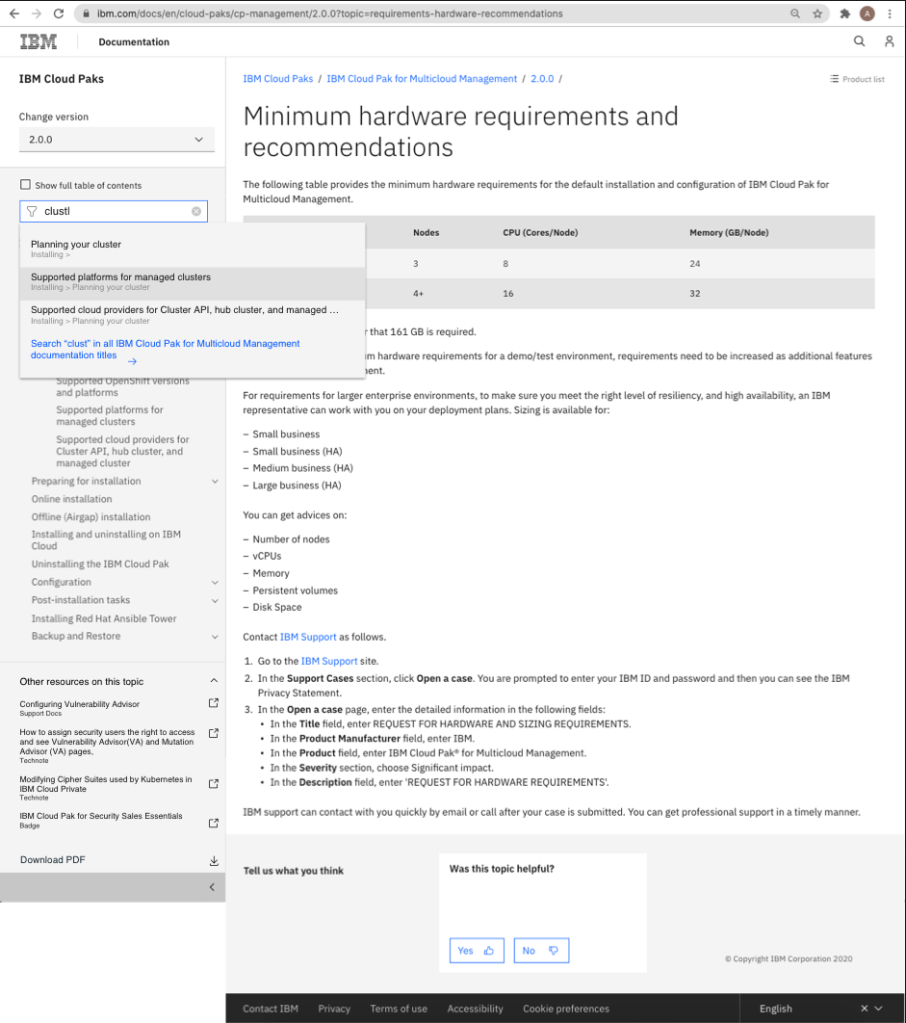
Table of content filter and type ahead suggestions
Keywords based filter on topic title is a completely new feature, tested with industry specific users via UserTesting.com.
Suggested matches expose full topic title and topic nomenclature in order of appearance in the hierarchies.

Multi-site search & scoped searches
Search access to multiple IBM technical content properties, Documentation, Developer, Support technotes, Redbooks, Training and IBM.com. Within z/OS product documentation, user can scope searches to specific catalogue.
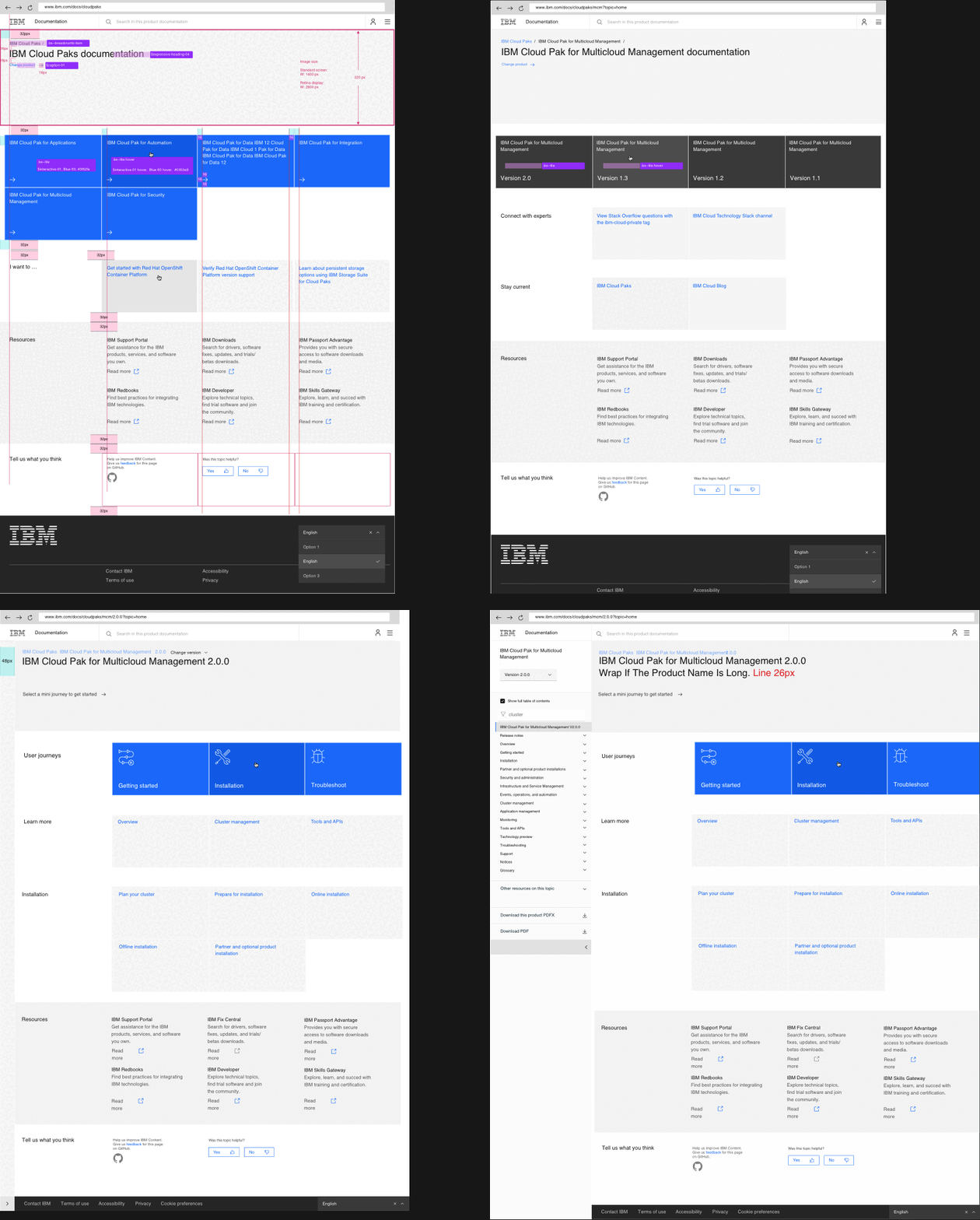
Solution, family and product version landing pages
Landing pages built with customizable card components via the landing page editor. Tool developed for the technical content community.
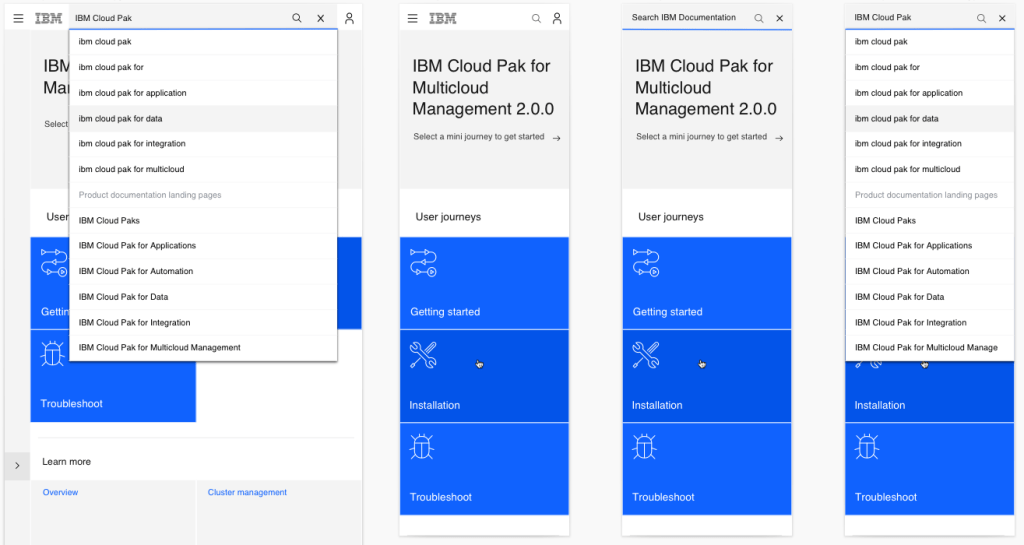
Mobile experience
Scaling, padding and requirements specific for a touch environment are some of the refinements executed to built a delightful human-centered experience.
IBM DOCUMENTATION IS..
33M users
197M page views
24M URLs
25% of all IBM.com traffic
12.4% NPS increase between 2Q2020 and 2Q2021
Reflection
Working on this extensive redesign allowed me to connect with a broad and diverse community of IBM technical documentation users both internally and externally. They continually inspire me during the design phases with their contributions, comments and efforts toward delivering the best of class product documentation. Sharing with them and learning from their struggles reminded me of the importance of design and its impact in a world that has become so dependent on digital self-serve.
 Andrée Proulx